4 Elegant Wall Sconces for Living Room to Transform Your Lighting Design
If your living room feels “almost done” but still flat at night, the missing ingredient is usually layered lighting—not more overhead brightness. Thoughtfully chosen wall sconces for living room instantly add depth, highlight architectural features, and make the space feel curated without a full remodel. In 2026 lighting trends, homeowners are leaning into warm, glare-controlled illumination, mixed finishes (brass + matte black), and fixtures that look sculptural even when turned off. This guide shares four Amazon-friendly options, how to place them for maximum impact, and the practical specs (lumens, color temperature, CRI) that actually matter.
Table of Contents
Why wall sconces are a living-room game changer (and what the data says)
Lighting designers often recommend ambient + task + accent lighting in one room because it reduces harsh shadows and improves comfort. In real-world terms:
- Glare control: Moving some light sources off the ceiling reduces “hot spots” and eye fatigue.
- Perceived spaciousness: Light washing up/down walls makes ceilings feel higher and corners feel larger.
- Better mood lighting: Warm, indirect light is associated with higher visual comfort—especially in evening settings.
- More flexibility: Dimmers and directional heads let you change the room’s “scene” without rearranging furniture.
A practical benchmark: many living rooms feel balanced with 1,500–3,000 total lumens across all sources (not just sconces). Two wall sconces commonly contribute 400–1,600 lumens combined depending on style, bulb, and shade diffusion—enough for atmosphere and accents, not necessarily full-room task lighting.
Our 4 Top Amazon Picks (ranked by best use case)
These are popular, widely available styles you can search easily on Amazon. Instead of chasing hype, the ranking below is based on what most living rooms actually need: glare control, versatility, easy installation, and design fit across styles.
Quick comparison table
| Rank | Best for | Style vibe | Light distribution | Installation difficulty | Why it wins |
|---|---|---|---|---|---|
| 1 | All-around living rooms | Modern + timeless | Up/down or diffused | Medium | Balanced glow + visual impact |
| 2 | Cozy corners & reading | Classic transitional | Downlight/task | Medium | Great near sofa/chair |
| 3 | Accent walls & art | Minimal + directional | Focused beam | Medium | Highlights artwork/features |
| 4 | Renters & no-junction-box | Plug-in flexibility | Diffused | Easy | Fast upgrade, minimal tools |
Tip: If you want a quick starting point for styles that lean sleek and current, browse modern wall sconces and filter by finish, bulb type (E26/G9/LED), and “dimmable.”
1) Modern Up/Down LED Sconce (Best overall for layered ambience)
A clean up/down sconce is the easiest way to make a living room look “designed.” It throws light both upward and downward, creating soft gradients on the wall—exactly what makes spaces feel more expensive and less flat.
Why it works
- Creates architectural drama even on plain drywall.
- Excellent for symmetry: Flank a TV console, fireplace, or large art.
- Feels modern without being cold when paired with warm color temperature bulbs (2700K–3000K).
What to look for (data-driven checklist)
- Output: 500–900 lumens per sconce for gentle ambient layering.
- Color temperature: 2700K (cozy) or 3000K (clean-warm).
- CRI: 90+ if you want skin tones, art, and wood finishes to look rich.
- Beam control: Louvered or frosted diffusers reduce glare.
Best placement ideas
- Flanking a focal point: 60–72 inches from floor to center, spaced 60–90 inches apart.
- Along a long wall: Install every 6–8 feet for a gallery-like rhythm.
Pros
- Strong “designer” effect with minimal furniture changes
- Great for ambient + accent layering
- Pairs well with dimmers
Cons
- Some designs are less effective on heavily textured walls
- Hardwired models may require a junction box
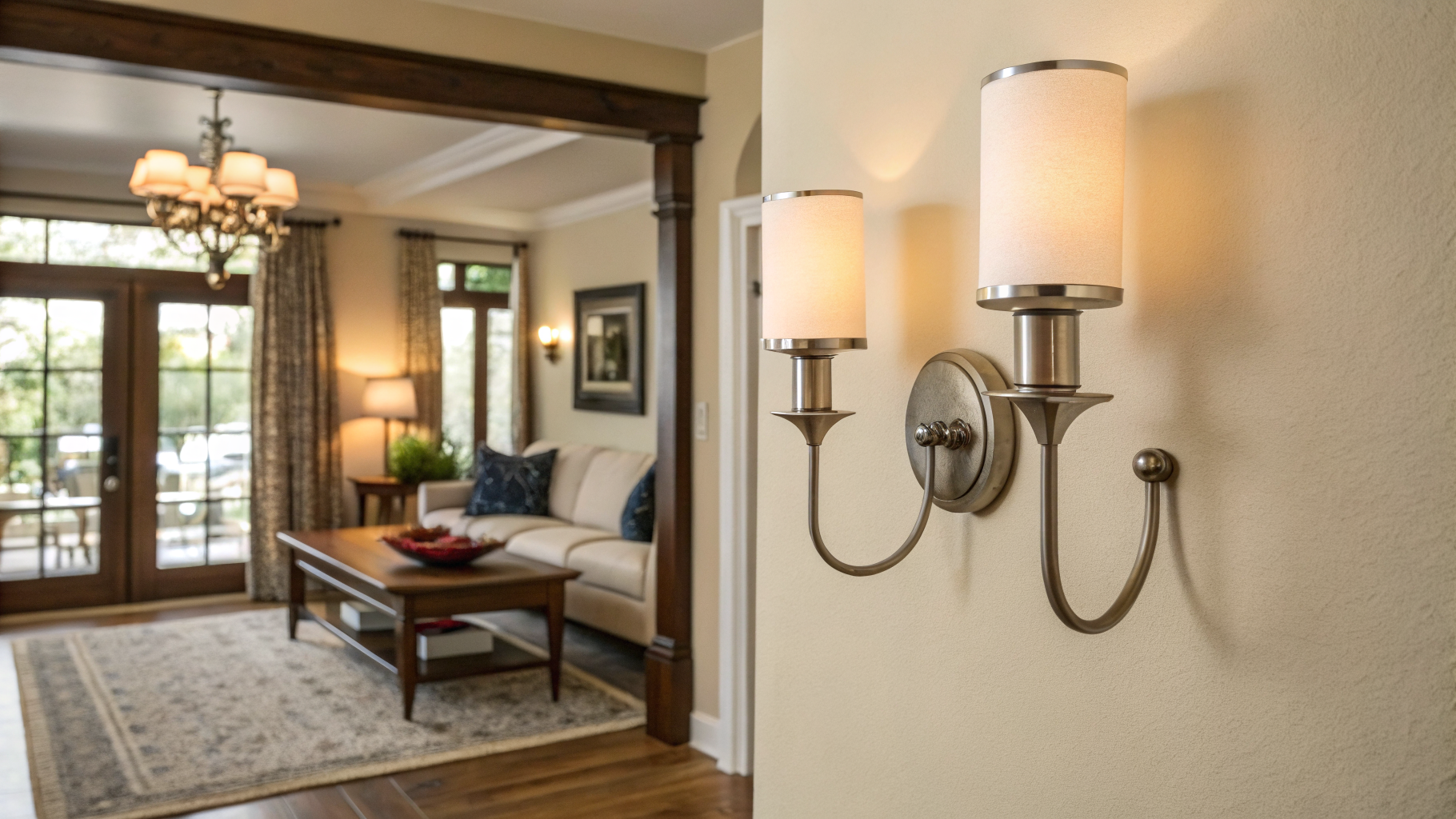
2) Fabric Shade Sconce with Warm Diffusion (Best for cozy reading zones)
If your living room is where you actually relax—movie nights, reading, conversation—a fabric-shade sconce adds softness that glass or bare-bulb styles can’t match. It’s a classic move for comfort-forward lighting design.
Why it works
- Softens faces and reduces shadows, making the room feel welcoming.
- Adds texture: Linen, cotton, and pleated shades bring a “furnished” look to the wall.
- Practical task light when placed near seating.
What to look for
- Bulb base: E26 is easiest for bulb variety (LED, smart bulbs, warm dim).
- Shade size: 6–10 inches wide is usually proportional for living rooms.
- Dimming: Choose “dimmable” + a compatible wall dimmer (or smart bulb) for control.
Best for
- A reading chair corner (paired with a small side table)
- Either side of a sofa (especially if you don’t want floor lamps)
- Small living rooms where table lamps crowd the surface space
Pros
- Ultra-flattering, cozy light
- Makes minimalist rooms feel warmer
- Great for vintage, transitional, or modern-classic interiors
Cons
- Fabric shades can collect dust
- Not as “architectural” as up/down styles
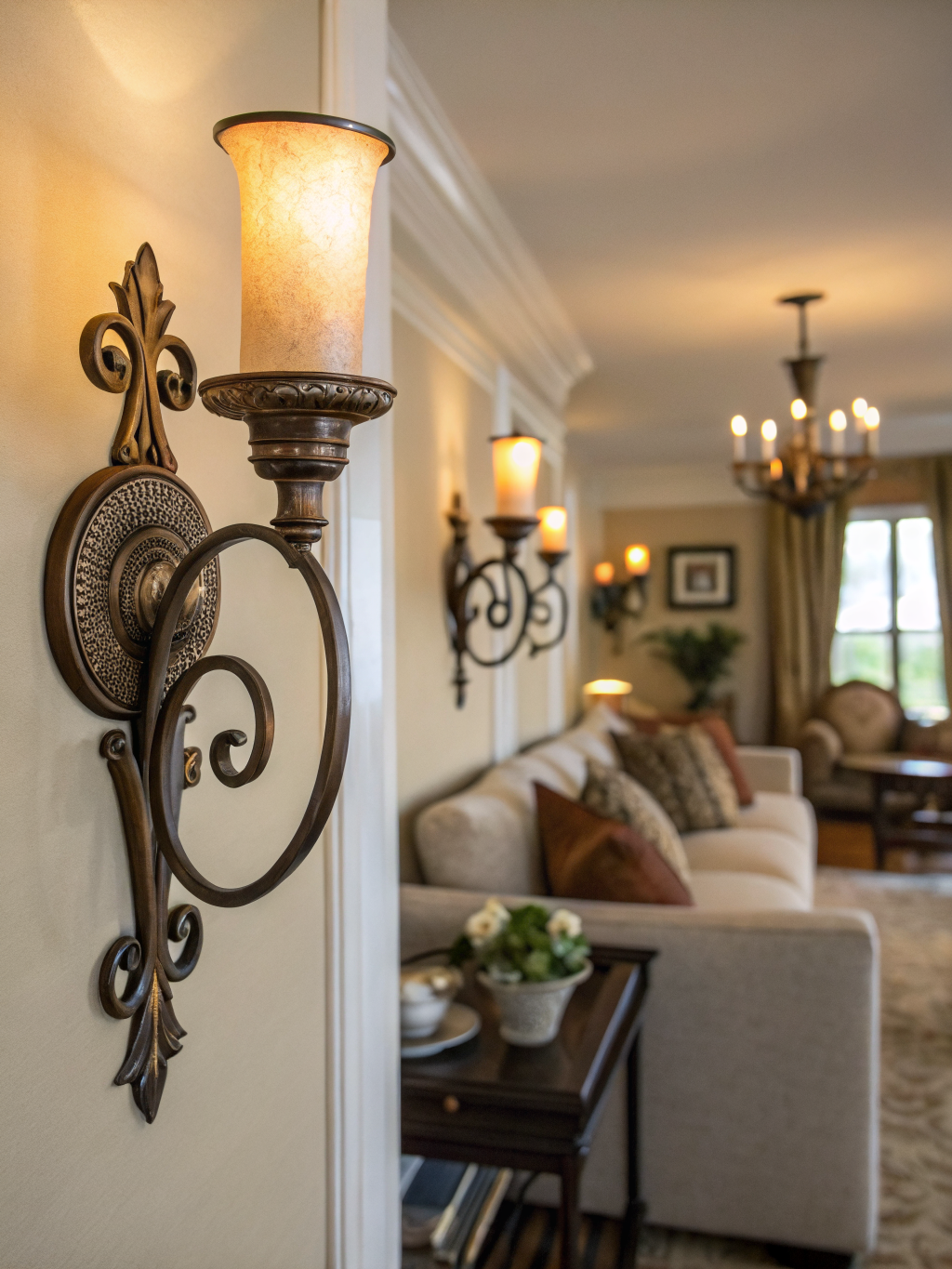
3) Adjustable Swing-Arm Sconce (Best for task lighting + flexibility)
Swing-arm sconces are the workhorse of living-room lighting. They’re ideal if you want targeted light for reading, puzzles, or late-night laptop time—without dedicating floor space to a lamp.
Why it works
- Directional control: Aim light exactly where you need it.
- Improves functionality in multi-use living rooms (lounging + working).
- Looks intentional when installed with symmetry or aligned to seating.
What to look for
- Arm reach: 12–18 inches is usually enough for sofa/chair use.
- Shade style: Metal cones give focused light; fabric shades soften it.
- Bulb brightness: 800–1,100 lumens (equivalent to 60–75W incandescent) if it’s your main reading light.
- Glare tip: Choose an opaque shade with a diffuser if the bulb is visible at eye level.
Placement that avoids common mistakes
- Mount the backplate so the light source sits just above shoulder height when seated (often 48–60 inches to center, depending on furniture).
- Keep the arm from extending into walkways—test the “fully extended” position before drilling.
Pros
- Best for reading and real-life use
- Adjustable and adaptable
- Great in small spaces
Cons
- Visible hardware can feel busy in very minimal rooms
- Poor placement can cause glare if the bulb is exposed
4) Plug-In Picture-Light or Cylinder Sconce (Best for renters and fast upgrades)
Not every living room has wiring where you want light. Plug-in sconces (or sconce-like picture lights) give you the look of built-ins with minimal commitment—perfect for rentals or quick redesigns.
Why it works
- Instant transformation: No electrician required.
- Lets you test placement before committing to hardwiring later.
- Perfect for accenting: Great above art, shelves, or a bar cart.
What to look for
- Cord length: 8–15 feet gives more routing options.
- Cord management: Look for cord covers or paintable raceways for a clean finish.
- Mounting: Secure anchors matter—especially for heavier metal fixtures.
Styling tips for a polished look
- Use a cord cover painted the same color as the wall.
- Pair two plug-ins symmetrically for a built-in vibe.
- Choose warm bulbs (2700K) so it doesn’t feel like “temporary lighting.”
Pros
- Renter-friendly and flexible
- Fastest path to better lighting
- Great for highlighting décor
Cons
- Visible cords unless managed
- Not as seamless as hardwired sconces
How to choose the right wall sconces for your living room (without overthinking it)
When you’re comparing options, these four criteria keep you from buyer’s remorse:
Purpose first:
- Ambient mood: up/down or diffused shades
- Reading/task: swing-arm or downlight
- Accent/art: directional cylinder or picture light
Brightness and warmth:
- Ambient sconces: 400–800 lumens each
- Task sconces: 800–1,100 lumens each
- Color temp: 2700K (cozy), 3000K (clean-warm)
Finish coordination:
Use the “rule of two”: repeat your chosen metal finish at least twice in the room (e.g., sconces + coffee table legs).Scale:
Large wall, high ceilings, big sofa? Go larger or more sculptural. Small room? Choose slimmer profiles so the wall doesn’t feel crowded.
If you’re building a cohesive plan, start with wall sconces for living room placement around your focal point, then layer in table/floor lighting.
Common mistakes to avoid (that make sconces look “off”)
- Mounting too high: Most living rooms look best around 60–72 inches from floor to center (adjust for ceiling height and sightlines).
- Using one sconce where two are needed: Symmetry matters around fireplaces, TVs, and large art.
- Choosing exposed bulbs without glare control: If you can see the filament at eye level, it may feel harsh at night.
- Skipping dimmers: Dimming is the difference between “bright” and “beautiful.”
- Ignoring wall color: Dark paint absorbs light—plan for more lumens or more fixtures.
Maintenance and longevity tips (so your lighting stays elegant)
- Dust monthly: Especially fabric shades and upward-facing cups (they trap dust).
- Use LED bulbs: Lower heat = longer fixture life and fewer shade yellowing issues.
- Check hardware yearly: Tighten set screws and mounting plates to prevent wobble.
- Smart control: If rewiring is difficult, use smart bulbs for scheduling and dimming without changing switches (confirm compatibility and bulb base).
FAQs about wall sconces in living rooms
How many wall sconces should a living room have?
Most living rooms look balanced with 2 to 6 sconces, depending on room length and whether they’re primarily accent or task lights. Two is common for symmetry (fireplace/TV wall), while four to six works well in larger spaces for even wall washing.
Are wall sconces bright enough to replace overhead lighting?
Usually not by themselves. Think of sconces as ambient and accent layers. If you want them to function as primary light, choose higher lumen output (or more fixtures) and add a dimmer to maintain comfort.
What color temperature is best for a living room?
For most homes, 2700K feels cozy and relaxing. If your living room doubles as a workspace or you prefer a “crisper” look, 3000K is a popular compromise that still feels warm.
Should sconces point up or down?
- Up/down: best for ambience and visual height
- Down: better for task and reading
- Directional: best for art, shelving, or highlighting textures (stone, paneling)
Do I need an electrician to install wall sconces?
For hardwired sconces, yes—especially if new wiring or junction boxes are needed. For plug-in models, you can typically DIY with basic tools and proper anchors.
What’s the ideal height for wall sconces in a living room?
A reliable starting point is 60–72 inches from the floor to the center of the fixture. Adjust based on ceiling height, furniture height, and whether the sconce is meant for reading (lower) or ambience (slightly higher).
When you choose wall sconces for living room with the right purpose, brightness, and placement, your space instantly feels more layered, intentional, and inviting—without needing new furniture or a major renovation. And if you’re aiming for a sleek, current look, exploring curated modern wall sconces can help you quickly narrow down finishes and shapes that match your room’s style.