5 Best Treadmills for Home in 2026 – Top Picks for Every Budget
Choosing the Best Treadmills for Home in 2026 can feel overwhelming: speeds, motors, incline ranges, app subscriptions, foldability, and—most importantly—whether it will actually fit your space and routine. This guide narrows the field to five Amazon-popular models across budgets, with clear specs, real-life use cases, and what matters most if you’re buying your first home treadmill or upgrading an older one.
Table of Contents
Quick comparison: 2026’s top home treadmills (at a glance)
Note: Specs and pricing can vary by seller, promos, and model year. Use this as a decision framework, then confirm details on the product page before buying.
| Pick (2026) | Best for | Motor (approx.) | Speed | Incline | Deck (approx.) | Folding | Typical price tier |
|---|---|---|---|---|---|---|---|
| NordicTrack Commercial 1750 | Most people who want “gym-like” feel | ~3.5 CHP | 0–12 mph | Up to ~12% | ~22″ x 60″ | Yes | $$$ |
| Horizon Fitness 7.4 AT | Runners who do intervals (fast controls) | ~3.5 CHP | 0–12 mph | Up to ~15% | ~22″ x 60″ | Yes | $$–$$$ |
| Sole F80 | Cushioned, steady miles + strong warranty reputation | ~3.5 CHP | 0–12 mph | Up to ~15% | ~22″ x 60″ | Yes | $$–$$$ |
| XTERRA Fitness TR150 | Budget walkers/joggers | ~2.25 HP | 0–10 mph | Manual | ~16″ x 50″ | Yes | $ |
| UREVO Under-Desk Walking Pad | Small spaces, walking while working | ~2.0–2.5 HP (varies) | ~0–4 mph | None | Compact | Typically slim | $–$$ |
How we picked (so you can pick confidently)
When readers search for the Best Treadmills for Home, they usually care about five things more than flashy screens:
- Performance for your training
- Walking, jogging, or running changes the minimum motor power and deck stability you need.
- Deck size & cushioning
- Runners typically feel best on ~20″+ width and ~55–60″ length; walkers can go smaller.
- Incline (and how you’ll use it)
- Incline adds intensity without requiring sprint speed—great for joint-friendly cardio.
- Noise & apartment-friendliness
- Belt quality + motor + frame = how “thumpy” it feels. This matters more than people expect.
- Long-term value
- Warranty, parts availability, and customer support can matter more than a few extra mph.
1) NordicTrack Commercial 1750 — Best overall “gym-feel” choice
If you want one treadmill that can handle long runs, steady incline work, and household use from multiple people, the NordicTrack Commercial 1750 remains a 2026 favorite. It’s often recommended because it balances a strong motor with a roomy deck and a polished console experience.
Why it works
- Powerful enough for frequent running (especially for runners who train year-round)
- Roomier deck helps reduce that “tightrope” feeling at higher speeds
- Incline support makes it easy to build aerobic fitness without pounding
What to look for before buying
- Check whether your preferred training content requires a subscription (many connected treadmills do).
- Measure your space with clearance: you’ll want room behind the deck for safety.
Pros
- Strong all-around performance for most households
- Comfortable deck size for taller runners
- Great for incline-based training blocks
Cons
- Larger footprint than budget models
- Ongoing subscription can be a deal-breaker for some
Best for: runners and mixed households who want one “do-it-all” machine.

- [Value-Packed Membership] – An iFIT Pro Membership ($39/mo) is required to access all iFIT content and connected feature…
- [16″ Touchscreen] – Tilt the 16″ touchscreen to keep the optimal viewing angle for your height. With an iFIT Pro Members…
- [0-12 MPH] – Run, jog, or walk with speeds up to 12 MPH. Perfect for home workouts, cardio training, and endurance build…
2) Horizon Fitness 7.4 AT — Best for intervals (fast speed & incline changes)
Interval training is where many treadmills get annoying: slow button response, clunky controls, and laggy incline changes. Horizon’s AT series is popular because it’s built for quick adjustments—useful for HIIT, tempo runs, and structured workouts.
Why it works
- Fast dial controls help you change speed/incline without breaking stride
- Solid motor class for regular running
- Often less “locked into” one content platform, depending on model bundle
Practical buying notes
- If multiple family members use the treadmill, quick controls reduce fuss—people actually use it more.
- Consider adding a mat to reduce vibration if you live upstairs.
Pros
- Great user experience for intervals
- Strong deck size for runners
- Generally good value for performance level
Cons
- Console experience isn’t always as “cinematic” as premium screen-first brands
- Availability/pricing can vary a lot on Amazon
Best for: runners who train with speed changes, hill repeats, or guided workouts where controls matter.

- CONNECT TO APPLE WATCH: Get an easy, secure way to connect your Apple Watch to keep your metrics in sync
- FITNESS APP COMPATIBLE: Connect with fitness apps including Peloton, Strava, and Zwift (Separate subscriptions required)
- RAPID SYNC MOTOR: QuickDial controls and Rapid Sync Technology for faster, easier speed and incline changes
3) Sole F80 — Best “steady miles” treadmill with a comfort-first feel
Sole treadmills have a loyal following for a reason: they tend to be stable, comfortable underfoot, and built for people who just want reliable miles without overthinking the tech. The F80 is a sweet spot for many home users—more capable than entry-level, but not as subscription-centric as some competitors.
Why it works
- Cushioning and deck feel suit walkers and runners who prioritize joint comfort
- Solid incline range for heart-rate-focused training
- Often praised for durability in long-term household use
Practical buying notes
- If your priority is “I want to walk/run 4–6 days/week for years,” this category of treadmill often makes the most sense.
- Make sure it fits through doorways—some models arrive heavy and bulky.
Pros
- Comfortable for longer sessions
- Strong specs for the price tier
- Great for incline walking without maxing speed
Cons
- Heavier machine (moving it is a project)
- Less “smart” flair compared to screen-first models
Best for: consistent walkers/joggers and runners who want comfort and stability over flashy features.

- UNLEASH YOUR FULL POTENTIAL – Elevate your fitness journey with our Sole F80 Treadmill! Featuring a powerful 4.0 HP moto…
- VERSATILE WORKOUTS – This walking and running treadmill offers an array of fitness programs, including Manual, Hill, Fat…
- SPACE-SAVING DESIGN – This folding treadmill features a release lever that makes storage a breeze. These are the perfect…
4) XTERRA Fitness TR150 — Best budget treadmill for walking + light jogging
Not everyone needs 12 mph and steep incline to get healthier. If your goal is daily walking, easy jogging, or a simple way to hit steps when weather is bad, the XTERRA TR150 is a common Amazon budget pick.
Why it works
- Affordable entry point into owning a treadmill
- Foldable design helps in smaller homes
- Simple console is less intimidating for beginners
What to be realistic about
- The deck is narrower/shorter than midrange runners’ treadmills—fine for walking, less ideal for tall runners at speed.
- Manual incline is workable, but you’ll adjust less often (because it’s not as convenient).
Pros
- Budget-friendly
- Straightforward for beginners
- Good for walking routines and light jogging
Cons
- Smaller deck and lower speed ceiling vs. premium models
- Not ideal for heavy interval training
Best for: beginners, walkers, and anyone who wants a low-cost option for consistent cardio.
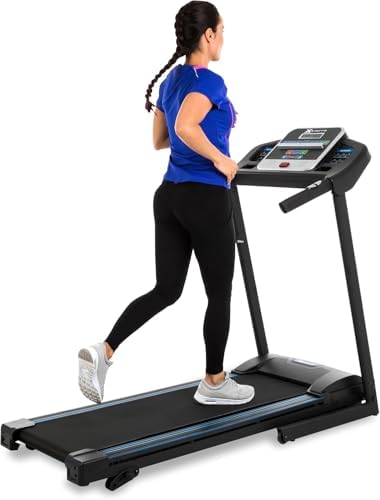
- Large 16″ X 50″ Walking/Running Surface Accommodates Users Of Many Sizes And Stride Lengths.110V Cord/Outlet Power Sourc…
- Intuitive 5″ Lcd Display Is Easy To Read And Keeps You Updated On Speed, Incline, Time, Distance, Calories And Pulse
- 12 Preset Programs And 3 Manual Incline Settings Offer Unmatched Variety For Your Workouts
5) UREVO Under-Desk Walking Pad — Best for apartments and “walk while you work”
If the biggest obstacle is space—or you want to move more during the workday—an under-desk walking pad can be the smartest kind of home treadmill. These are built for walking (not running), and they slide under a desk or bed when you’re done.
Why it works
- Slim footprint for apartments, studios, and shared spaces
- Encourages daily movement: 20–60 minutes of walking becomes easier to stick with
- Usually quieter than full-size running treadmills at walking speed
Buying notes
- Check max user weight and belt dimensions—walking pads vary widely.
- Choose based on your stride: taller users should avoid very short belts.
Pros
- Space-saving
- Great for daily steps and low-impact movement
- Pairs well with standing desks
Cons
- Not designed for running
- Limited speed and no incline on most models
Best for: remote workers, small spaces, and anyone focused on daily walking consistency.

- 🏃【Race the World’s Top Marathons at Home】Train like a pro with the UREVO CyberMega Treadmill’s Marathon-Specific Traini…
- 🦄【AI Smart Marathon Coach APP】Take your home marathon training to the real level with your target to Berlin or Boston Ma…
- ⚡【Dual Brushless 4.0 HP Motor】CyberMega treadmill offers powerful performance and boasts a lifespan that is ten times lo…
Which treadmill is best for you? (Use-case shortcuts)
If you’re still deciding, match your main goal to the right type:
- Best overall: NordicTrack Commercial 1750
- Best for intervals/HIIT runners: Horizon 7.4 AT
- Best for comfort + steady mileage: Sole F80
- Best budget starter: XTERRA TR150
- Best for tiny spaces and workdays: UREVO Walking Pad
If you want one simple rule: buy the treadmill that matches the workout you’ll do most often, not the one that supports the workout you wish you’ll do.
What to check before buying any home treadmill (2026 buyer checklist)
Measure your space (twice)
- Length and width of the footprint
- Clearance behind the belt (safety)
- Ceiling height if you’re tall and plan to use incline
Confirm specs that actually change your experience
- Motor power: walkers can go lower; runners benefit from higher continuous horsepower
- Deck size: taller runners need more belt length
- Incline: a major “fitness multiplier” without needing sprint speed
- Folding mechanism: useful, but don’t buy folding if you’ll never fold it
Don’t ignore the “boring” stuff
- Warranty terms (frame vs. parts vs. labor)
- Return policy and shipping (treadmills are heavy)
- Replacement parts availability
Tips, common mistakes, and setup advice
Tips that make treadmills easier to stick with
- Place it where you’ll actually use it: a spare room is great, but a corner of a living room may be more realistic.
- Use a fan: perceived effort drops when you stay cooler.
- Pre-plan workouts: save 3–5 go-to sessions (incline walk, easy jog, interval day).
Common mistakes to avoid
- Buying too small a deck if you plan to run. You’ll feel unstable and stop using it.
- Overpaying for screen size but under-buying motor/deck quality.
- Skipping a treadmill mat on upper floors (it helps with vibration and protects flooring).
- Ignoring power requirements (dedicated outlet is safer for higher-powered models).
Maintenance & longevity: keep your treadmill running smoothly
A treadmill is one of the few home fitness tools with moving parts under load—basic care matters.
- Clean weekly: wipe sweat from rails and console; vacuum around/under the belt area.
- Lubricate as recommended: some belts are pre-lubed; others need periodic lubrication (follow manufacturer guidance).
- Check belt alignment: if it drifts, adjust early—misalignment increases wear.
- Tighten bolts every few months: vibration can loosen hardware over time.
- Listen for changes: squeaks, slipping, or new thumping is often an early warning.
This is how you get “years of use” instead of “it broke after a season.”
FAQs: Best treadmills for home in 2026
What motor power do I need for a home treadmill?
For walking, many users do fine with lower motor power; for jogging/running, a stronger motor (often cited around the 3.0 CHP class and up) tends to feel smoother and hold up better over time—especially for frequent use.
Is incline really important?
Yes—incline is one of the best ways to increase intensity without increasing impact. Incline walking is joint-friendly and effective for cardio conditioning.
Are folding treadmills less durable?
Not necessarily. Foldable models can be very sturdy, but durability depends more on frame construction, deck, and motor quality than the folding feature itself.
What’s the best treadmill for apartments?
If you’re primarily walking, a slim walking pad (like the UREVO style) can be ideal. If you need running capability in an apartment, prioritize a stable frame, a treadmill mat, and a model known for quieter operation at moderate speeds.
Do I need a subscription to use these treadmills?
Some connected treadmills work best with a subscription, but most still allow manual workouts. If you dislike recurring costs, prioritize models that feel complete without paid content.
How do I choose the Best Treadmills for Home for weight loss?
Pick a treadmill you’ll use consistently. For many people, the winning combo is incline walking (lower joint stress, high calorie burn) plus 2–3 weekly sessions that include short intervals. Consistency beats maximum features.
Final takeaway
The Best Treadmills for Home aren’t automatically the most expensive—they’re the ones that match your routine, space, and the kind of workouts you’ll repeat for months. Use the comparison table to narrow to one or two options, then confirm deck size, incline, warranty, and room measurements before you hit “Buy.”