7 Best Comforters for Sleeping in 2026
Buying a comforter in 2026 isn’t just about “warm vs. not warm.” Sleep tech, better fabric standards, and smarter fills mean the right pick can reduce night sweats, improve temperature stability, and even cut down on allergens. If you’re searching for the best comforters for sleeping, comparing weights, fill types, and real-world usability is essential when choosing among the best comforters for sleeping available today. This guide to the best comforters for sleeping will help you choose confidently—whether you’re upgrading a master bedroom, guest room, or a dorm setup.
Table of Contents
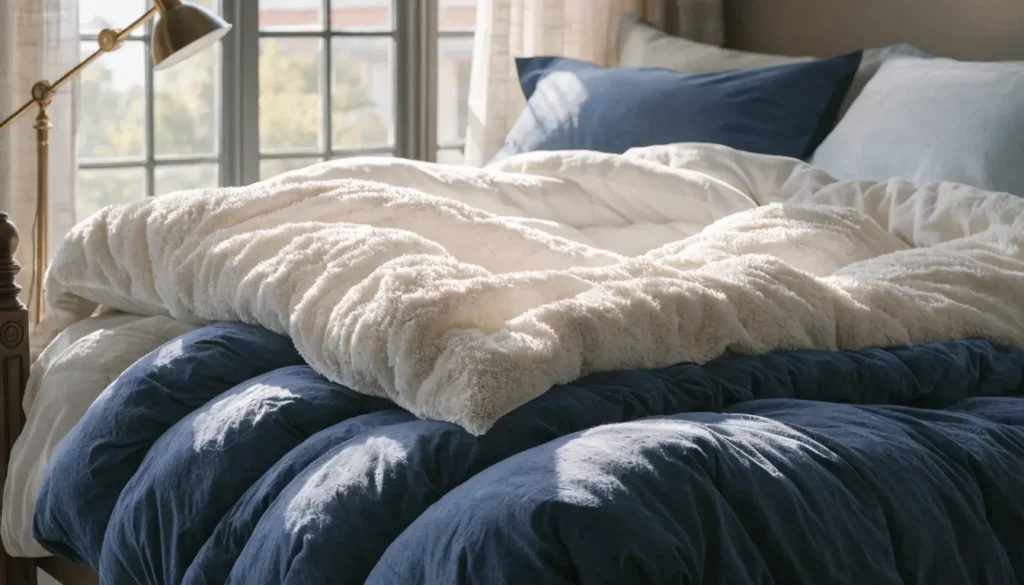
1) Brooklinen All-Season Down Alternative Comforter (Best overall for most sleepers)
Brooklinen’s all-season down alternative is popular because it nails the middle ground: it feels “hotel plush” without trapping as much heat as many ultra-lofty comforters. The cotton shell tends to feel smoother than microfiber, which matters if you sleep with the comforter directly on your skin.
Why it works in 2026: More buyers now prioritize year-round versatility—one comforter that doesn’t force a seasonal swap. A medium-weight down alternative is often the most practical “one and done” option.
What to look for (and why it matters):
- Cotton shell: typically breathes better than polyester shells
- All-season loft: good warmth without becoming stifling
- Duvet-friendly design: corner loops/ties help prevent shifting
Pros
- Balanced warmth for mixed-temperature couples
- Smooth, less “swishy” feel than some microfiber shells
- Works well inside a duvet cover
Cons
- Pricier than budget microfiber alternatives
- All-season can still run warm for very hot sleepers
2) Utopia Bedding All-Season Down Alternative Comforter (Best budget pick)
Utopia Bedding is often the move when you want a clean, fluffy bed upgrade without overthinking it. It’s also a strong “backup comforter” for guest rooms because it’s low-cost, widely available, and easy to wash.
Why it works: In many households, the comforter takes a beating—pets, kids, frequent washing. Budget doesn’t have to mean disposable, but you do want something forgiving.
Best for
- First apartments, dorms, guest bedrooms
- People who prefer a lightweight-to-medium feel
- Shoppers building a full bedroom comforter set without overspending
Pros
- Excellent value for the price
- Machine-wash friendly
- Lightweight enough for warmer climates
Cons
- Microfiber shell can feel less breathable than cotton
- May flatten faster than higher-end options
3) LINENSPA All-Season Reversible Down Alternative (Best for easy care + everyday use)
LINENSPA’s reversible style is a practical choice when you want something simple, washable, and “always looks fine,” even if you’re not styling your bed like a catalog shoot.
Why it works: Reversible comforters are a quiet hack—flip it to refresh the look, hide pet hair better, or rotate wear patterns so it lasts longer.
What makes it a smart pick
- Sewn-through construction: helps keep fill in place (though it can reduce loft vs. baffle-box)
- Reversible design: easy aesthetic change with minimal effort
- Low-maintenance fabric: generally holds up well to regular laundering
Pros
- Great for households that wash bedding often
- Simple, “no-fuss” daily comfort
- Reversible for style flexibility
Cons
- Sewn-through designs can create cooler “channels” in colder rooms
- Less premium drape than higher-end cotton shells
4) Egyptian Bedding Goose Down Comforter (Best for cold sleepers)
If your biggest problem is waking up cold—even with the heat on—down is still the benchmark for warmth-to-weight efficiency. A baffle-box goose down comforter tends to hold heat while staying lighter than many bulky synthetics.
Data-driven buying cues (down comforters):
- Fill power: higher fill power generally means better loft and insulation per ounce
- Baffle box construction: reduces cold spots by preventing down migration
- Cotton shell: helps with breathability and comfort
Pros
- Warm without feeling heavy
- Excellent loft and cozy “puff”
- Great winter comforter for colder climates
Cons
- Not ideal for allergies (unless specifically hypoallergenic/treated)
- Often requires more careful cleaning than down alternative
5) Buffy Cloud Comforter (Best breathable “cozy” feel for hot sleepers)
Buffy’s Cloud comforter has earned a reputation for softness and breathability, largely thanks to its eucalyptus-based lyocell shell and lightweight recycled fill. In real-world terms: it feels cozy, but it’s less likely to turn your bed into a heat trap.
Why it fits 2026 trends: Shoppers are increasingly looking for “cooling” materials that don’t feel slick or plastic-like. Lyocell tends to feel smooth and airy.
Pros
- Breathable shell that feels cool-to-neutral
- Nice drape (doesn’t feel stiff)
- Good choice for humid climates
Cons
- Premium price
- If you’re very cold at night, it may feel too light without layering
6) Sleep Number True Temp (or similar “cooling” comforter) (Best for night sweats)
Cooling comforters aren’t magic, but the better ones do help manage microclimate—especially for people who wake up sweaty around 2–4 a.m. Models designed for temperature regulation typically combine moisture-wicking covers with fiber blends that release heat more efficiently than standard polyester fills.
Who it’s best for
- Hot sleepers and perimenopause/menopause temperature swings
- People who want less “clammy” bedding
- Couples where one person runs hot
Pros
- More temperature-stable than many traditional comforters
- Often lighter and easier to layer
- Helps reduce damp, overheated feeling
Cons
- Cooling effect varies by room temperature and sheets used
- Some “cooling” fabrics can feel slick (personal preference)
7) Luxome Weighted Comforter (or similar) (Best for restless sleep + calm)
Weighted comforters are less about warmth and more about pressure. The right weight can reduce tossing and turning for some people by providing a gentle, steady “grounding” sensation.
How to choose weight (rule of thumb)
- Aim for ~7–12% of body weight (many people start near 10%)
- If you share a bed, many sleepers prefer individual weighted blankets rather than one shared comforter
Pros
- Can help with restlessness and winding down
- Great for reading or relaxing in bed too
- Available in multiple weights and fabrics
Cons
- Not everyone likes pressure while sleeping
- Can be warmer (especially minky covers)
- Washing can be inconvenient unless it has a removable cover
Best option by use case (quick matching guide)
- You want one comforter for the whole year: Brooklinen All-Season Down Alternative
- You’re outfitting a guest room on a budget: Utopia Bedding All-Season
- You wash bedding often (pets/kids): LINENSPA Reversible
- You sleep cold or keep the thermostat low: Egyptian Bedding Goose Down (baffle box)
- You overheat easily: Buffy Cloud or a true cooling comforter
- You wake up sweaty at night: Sleep Number True Temp-style cooling comforter
- You’re restless or want calming pressure: Luxome Weighted
What to look for when choosing the best comforters for sleeping
1) Warmth is more than “thick vs. thin”
A comforter can look fluffy but still sleep cool if:
- the shell is breathable (cotton/lyocell),
- the fill doesn’t trap moisture,
- and construction prevents hot/cold pockets.
2) Construction: baffle box vs. sewn-through
- Baffle box: better loft + fewer cold spots (common in down)
- Sewn-through: easier to wash, usually cheaper, but can form cooler channels
3) Material matters for sensory comfort
- Cotton: crisp to buttery depending on weave; breathable
- Lyocell (eucalyptus): smooth, airy, good for hot sleepers
- Microfiber: soft, budget-friendly, sometimes less breathable
Tips & common mistakes (so you don’t regret your purchase)
Mistake #1: Buying “ultra-warm” for a warm room
If your bedroom is consistently above ~68–70°F, an ultra-warm comforter often leads to midnight kick-offs. Consider all-season + a throw blanket for flexibility.
Mistake #2: Ignoring your sheets
Even the best comforters for sleeping won’t feel cool if you pair it with heat-trapping sheets. Hot sleepers typically do better with percale cotton or lyocell sheets.
Mistake #3: Forgetting duvet compatibility
If you plan to use a duvet cover, look for corner loops/tabs. Without them, the comforter can bunch up and feel lumpy.
Maintenance & longevity advice (make it last)
- Use a duvet cover if you can—this reduces how often you need to wash the comforter itself.
- Wash gently and fully dry (especially down alternative). Incomplete drying can lead to odors or clumping.
- Fluff regularly: a quick shake each morning helps redistribute fill.
- Store properly: breathable cotton storage bag > plastic bin for long periods.
- Spot-clean fast: small spills cleaned early reduce the need for full washes.
FAQs: Comforters (buyer-focused)
What comforter is best for sleeping if I run hot?
Look for breathable shells (cotton percale or lyocell) and medium-light fills marketed as cooling or moisture-wicking. Also keep your sheets and mattress protector breathable—heat often builds from underneath.
Is down or down alternative better in 2026?
- Down is unbeatable for warmth-to-weight and loft, especially in cold rooms.
- Down alternative is easier to wash, often more allergy-friendly, and can be more temperature-neutral for year-round use.
How do I choose between a comforter and a duvet insert?
Functionally they’re similar. If you like changing styles or want easier cleaning, choose a duvet insert + duvet cover. If you want simple “grab and go,” a standalone comforter is easiest.
What’s the best comforter weight for most people?
A medium (all-season) comforter works for most bedrooms around 65–70°F. If you’re unsure, choose all-season and layer with a blanket in winter.
How often should I replace a comforter?
With a duvet cover and proper care, many comforters last 5–10 years. Replace sooner if you notice permanent clumping, flattened loft, or lingering odors after washing.
Can I build a cohesive look without overbuying?
Yes. Start with one versatile comforter in a neutral tone, then add style through a duvet cover, throw blanket, and pillow shams. If you prefer a coordinated bundle, a quality bedroom comforter set can simplify matching.
If you tell me your typical bedroom temperature, whether you run hot or cold, and whether you prefer “hotel fluffy” or “light and airy,” I can recommend the best match from this list in one quick shortlist.