
Best Smart Speakers for Bedroom in 2026
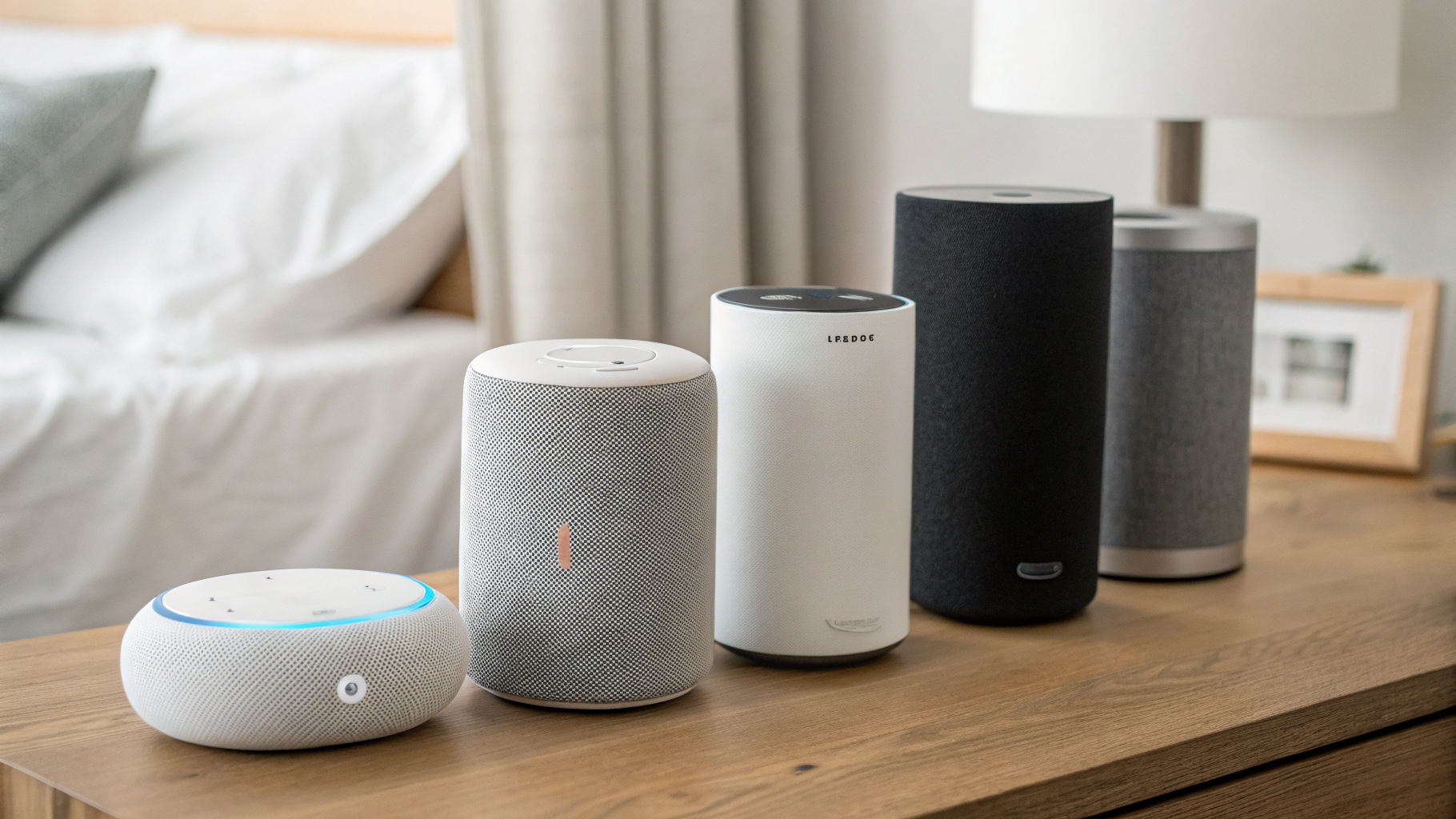
A bedroom is the one room where “smart” has to feel calm: gentle alarms, low-volume night playlists, hands-free lights, and timers that don’t jolt you awake. If you’re comparing the best smart speakers for bedroom setups in 2026, the right pick usually comes down to three things: sound at low volumes, reliable voice control in a quiet space, and sleep-friendly features (night modes, alarm options, and privacy controls).
Below is a data-driven shortlist of Amazon-favorite smart speakers that work especially well on a nightstand—ranked by overall bedroom fit, then broken down by who each one is best for.
Table of Contents
What makes a smart speaker “bedroom-ready” (a quick checklist)
Before you buy, run through these bedroom-specific criteria:
- Low-volume clarity: You want detail at whisper levels (late-night podcasts, rain sounds, white noise).
- Night mode / dimming: LEDs and screens should dim automatically.
- Alarm reliability: Multiple alarms, gradual volume, weekday/weekend routines.
- Microphone performance: It should hear you from bed without needing to shout.
- Privacy controls: Mic mute button, clear settings for recordings.
- Ecosystem match: Alexa, Google, Apple HomeKit, Sonos—choose what matches your phone and smart home.
If you’re trying to keep the whole setup simple, start with a compact bedroom smart speaker that supports routines (lights off, temperature down, sleep playlist on) and won’t dominate your nightstand.
#1 Echo Dot (5th Gen): best overall bedroom smart speaker (Alexa)
The Echo Dot (5th Gen) remains one of the most practical choices for the bedroom because it’s designed to do the basics extremely well—especially alarms, timers, and routines—while staying small and affordable.
Why it works in a bedroom
- Surprisingly full sound for its size: The latest Dot tuning is notably better than earlier mini speakers, and it keeps music intelligible at low volume.
- Bedroom routines are easy: “Goodnight” can turn off lights, lock doors, set alarms, and start white noise.
- Optional temperature sensor (model-dependent): Helpful for automations like “if bedroom gets warm, turn on fan.”
Best for
- First-time smart speaker buyers
- Anyone who wants the most value without giving up core features
- Alexa households (Ring, Fire TV, smart plugs, Echo ecosystem)
Pros
- Strong bedside features: alarms, timers, routines
- Compact footprint (nightstand-friendly)
- Excellent Alexa skill support (sleep sounds, meditation, smart home)
Cons
- Not the richest “hi-fi” sound compared with larger speakers
- Alexa ecosystem may feel ad-heavy in suggestions unless tuned in settings
Bedroom tip: Turn on “Adaptive Volume” (if available in your region) and set “LED brightness” to the lowest or schedule a night mode to keep the room dark.
#2 Google Nest Audio: best for Google Assistant and natural voice control
If your household already lives in Google—Android phones, Google Calendar, Nest thermostats—Nest Audio is one of the most comfortable bedroom picks. Its voice responses are natural, and it’s particularly strong at answering questions, controlling smart home devices, and reading your schedule without friction.
Why it works in a bedroom
- Balanced sound profile: Great for soft listening—acoustic playlists, podcasts, bedtime stories.
- Assistant intelligence: Fast answers, strong voice recognition, and solid multi-user support.
- Good for “quiet requests”: In many setups, Assistant handles softer commands reliably (useful when your partner is asleep).
Best for
- Android users and Google Home households
- People who want smart-home control + music in one speaker
- Anyone who prefers Google’s Q&A abilities
Pros
- Excellent voice assistant for daily info (weather, calendar, reminders)
- Clean, understated design that blends into bedroom décor
- Solid audio for its size
Cons
- Some features depend on region and account settings
- Fewer “sleep-sound” skills compared to Alexa (though still plenty of options)
Bedroom tip: Create a bedtime automation that reduces volume, turns off bedroom lights, and starts a calming playlist for 30–60 minutes, then stops playback.
#3 Apple HomePod mini: best for iPhone users and HomeKit bedrooms
For Apple households, the HomePod mini is often the smoothest bedroom experience: handoff audio from iPhone, Siri voice control, and HomeKit automations. It’s also a smart option when you want a speaker that feels quieter and more “polished” in day-to-day use.
Why it works in a bedroom
- Seamless Apple integration: Quick setup, easy control from iPhone, Siri commands feel native.
- Gentle sound signature: Excellent for nighttime listening—less harshness at low volumes.
- Privacy-forward defaults: Apple’s positioning can be reassuring for bedrooms.
Best for
- iPhone users, Apple Music listeners
- HomeKit homes (lights, sensors, smart plugs)
- Anyone who wants a minimalist bedside setup
Pros
- Great ecosystem fit (handoff, multiroom with Apple devices)
- Compact and attractive on a nightstand
- Strong smart-home control for HomeKit
Cons
- Works best inside Apple services (Apple Music vs. some third-party limitations)
- Siri is improving, but can be less flexible than Alexa for some commands
Bedroom tip: Pair two HomePod minis for stereo if you like music at night—the separation is subtle but noticeably more “room-filling” even at low volume.
#4 Sonos Era 100: best for bedroom audio quality (without losing “smart”)
If your priority is music quality—especially for soft listening and detail at low levels—Sonos Era 100 is a standout. It costs more than compact speakers, but it delivers a bigger, cleaner sound that doesn’t fall apart when you turn it down.
Why it works in a bedroom
- Clarity at low volumes: This is a huge bedroom win; you can hear vocals and podcast voices without pushing volume.
- Room-filling sound without harshness: Great for relaxing playlists, jazz, ambient music, and white noise that feels “smooth.”
- Multiroom done right: If you already have Sonos elsewhere, the bedroom becomes part of a seamless whole-home system.
Best for
- Music lovers who want a bedroom speaker that sounds “real”
- Homes already using Sonos in living room/kitchen
- People who want smart features but value audio first
Pros
- Excellent sound for the size (especially at low volume)
- Solid build quality and long-term platform support
- Great for multiroom audio setups
Cons
- Pricier than mini speakers
- Voice assistant choice may depend on region and current Sonos software support
Bedroom tip: Use Sonos volume limiting at night to prevent accidental loud playback if a routine misfires.
#5 Echo Show 5: best for bedside routines with a screen (clock, controls, quick glances)
Some bedrooms benefit from a small display—especially if you like a visible clock, want one-tap smart home controls, or use routines you want to confirm visually. Echo Show 5 is compact enough for a nightstand and brings extra convenience without needing your phone.
Why it works in a bedroom
- Always-on clock + dimming: A screen can be a downside in a bedroom, but Show 5 includes brightness controls and night mode options.
- Tap-to-control smart home: Lights, plugs, thermostats—easy when you don’t want to speak out loud.
- Bedside-friendly features: Alarms, timers, reminders, and routine confirmations.
Best for
- People who want a bedside clock + smart speaker in one
- Users with lots of Alexa smart home devices
- Anyone who likes visual controls for routines
Pros
- Useful display for time, weather, and quick controls
- Great Alexa routines and alarm handling
- Compact and simple for bedside use
Cons
- Screens aren’t for everyone in a sleep space
- Needs careful settings to avoid unwanted notifications or bright visuals at night
Bedroom tip: Disable promotional home content and turn on “Do Not Disturb” overnight so the screen stays calm and predictable.
Best option by use case (fast recommendations)
- Best overall: Echo Dot (5th Gen)
- Best for Google households: Google Nest Audio
- Best for iPhone + HomeKit: Apple HomePod mini
- Best sound quality for nighttime listening: Sonos Era 100
- Best with a clock/screen: Echo Show 5
If you’re still deciding, ask yourself one question: What ecosystem do I already use daily—Alexa, Google, or Apple? Matching your ecosystem usually matters more than small differences in speaker specs.
Setup tips for better bedroom performance (and fewer “why did it do that?” moments)
Put it in the right spot
- Keep it 6–18 inches from the wall for fuller bass (too close can sound boomy).
- Place it away from a fan or air purifier to improve microphone accuracy.
- Avoid putting it behind tall décor that blocks sound.
Create a true bedtime routine
A great bedroom automation usually includes:
- Set volume to 15–25%
- Dim or turn off lights
- Start sleep sounds or a calming playlist
- Set “Do Not Disturb”
- Optional: set thermostat to sleep temperature
Fix common mistakes
- Too many wake words nearby: If multiple assistants are in range, you’ll get misfires. Choose one main bedroom speaker.
- Notifications at night: Disable shopping/“by the way” suggestions and set quiet hours.
- Over-bright LEDs or screen: Use night mode scheduling so it’s consistent.
Maintenance and longevity advice (so it stays reliable for years)
- Restart monthly: A simple reboot fixes many connectivity glitches.
- Keep Wi‑Fi stable: Bedrooms at the edge of Wi‑Fi range cause most “didn’t respond” issues. If needed, add a mesh node.
- Dust gently: Speaker fabric and mics collect dust—use a soft brush or microfiber cloth.
- Review privacy settings quarterly: Clear voice history if you prefer and confirm mic mute works as expected.
- Update firmware: Enable automatic updates so security patches and performance improvements install quietly.
FAQs: choosing the best smart speakers for bedroom use
1) What’s the most important feature for a bedroom smart speaker?
Low-volume clarity and dependable alarms. Many speakers sound fine loud, but the bedroom is where you’ll listen softly—so clarity at 10–20% volume matters more than maximum loudness.
2) Is a screen smart speaker bad for sleep?
Not automatically. A small display can be helpful as a clock, but only if you configure it: enable night mode, reduce brightness, and schedule “Do Not Disturb” so the screen doesn’t light up unexpectedly.
3) Alexa vs Google vs Siri: which is best in the bedroom?
- Alexa: best routines and broad skill library (great for sleep sounds).
- Google Assistant: strong answers, calendar integration, and voice recognition.
- Siri (HomePod mini): best for Apple users and HomeKit control with a simple, polished experience.
4) Can one smart speaker replace a white noise machine?
For most people, yes. Smart speakers can play white noise, rain, brown noise, and ambient playlists on demand. If you’re sensitive to sound loops or want “true” mechanical noise, a dedicated machine can still be better.
5) How do I keep the bedroom speaker more private?
Choose a model with a physical mic mute button, review voice recording settings, and place it where guests can’t easily interact with it. You can also schedule the mic to be muted overnight (platform-dependent).
6) What if my partner and I have different phones (Android + iPhone)?
Pick based on your smart home and music preferences:
- If your lights/plugs are Alexa-based, go Echo.
- If you use Google Calendar and Android, Nest Audio is easiest.
- If you’re deep into HomeKit and Apple Music, HomePod mini feels best.
For mixed homes, Alexa or Google often offers the broadest compatibility.
Final takeaway
In 2026, the best smart speakers for bedroom are the ones that disappear into your routine: they respond softly, dim down at night, run predictable automations, and sound good without needing to get loud. If you want the safest all-around pick, start with Echo Dot (5th Gen). If your home already leans Google or Apple, Nest Audio or HomePod mini will feel more “native.” And if nighttime audio quality is your priority, Sonos Era 100 is the upgrade that’s easiest to hear immediately—especially at low volume.